
Modern off-road suspension systems have evolved far beyond basic shock absorbers.
Today’s high-performance shocks often feature adjustable compression and rebound damping, allowing drivers to tailor suspension behavior to different terrains, vehicle loads, and driving styles.
But what exactly do these adjustments do?
Understanding the science behind damping can help drivers maximize traction, comfort, stability, and suspension performance.
What Is Damping?
A shock absorber’s primary job is controlling spring movement.
Without damping, springs would continue bouncing after every impact.
Damping converts suspension motion into heat energy through hydraulic resistance, controlling how quickly the suspension compresses and extends.
Two critical damping functions exist:
- Compression damping
- Rebound damping
Each affects vehicle behavior differently.
Understanding Compression Damping
Compression damping controls how quickly a shock absorber compresses when encountering an obstacle.
Examples include:
- Rocks
- Potholes
- Sand whoops
- Trail ruts
- Speed bumps
Softer Compression Settings
Benefits include:
- Improved comfort
- Better small bump absorption
- Reduced driver fatigue
Potential drawbacks:
- Increased body roll
- Excessive suspension dive
- Less stability under aggressive driving
Firmer Compression Settings
Benefits include:
- Better control
- Reduced body movement
- Improved cornering
Potential drawbacks:
- Harsher ride quality
- Reduced comfort on rough trails
Understanding Rebound Damping
Rebound damping controls how quickly the suspension returns after compression.
This is equally important for maintaining traction and stability.
Softer Rebound
Allows wheels to return quickly.
Benefits:
- Improved traction on uneven surfaces
- Better wheel contact
Risks:
- Excessive bouncing
- Reduced stability
Firmer Rebound
Benefits:
- Better body control
- Reduced oscillation
Risks:
- Suspension packing
- Reduced wheel travel efficiency
Why Adjustable Damping Matters
No single suspension setting works perfectly everywhere.
Drivers may encounter:
- Highways
- Gravel roads
- Mountain trails
- Desert terrain
- Mud
- Snow
Adjustable damping allows optimization for each condition.
Common Off-Road Tuning Examples
Highway Travel
Recommended:
- Firmer compression
- Moderate rebound
Result:
- Improved stability
- Better handling
Rock Crawling
Recommended:
- Softer compression
- Softer rebound
Result:
- Better articulation
- Increased traction
Desert Driving
Recommended:
- Firmer compression
- Controlled rebound
Result:
- Greater stability at speed
Overlanding
Recommended:
- Balanced compression
- Balanced rebound
Result:
- Comfort and control under load
The Role of Shock Design
Adjustability works best when combined with premium shock construction.
Important features include:
- CNC-machined components
- Large piston designs
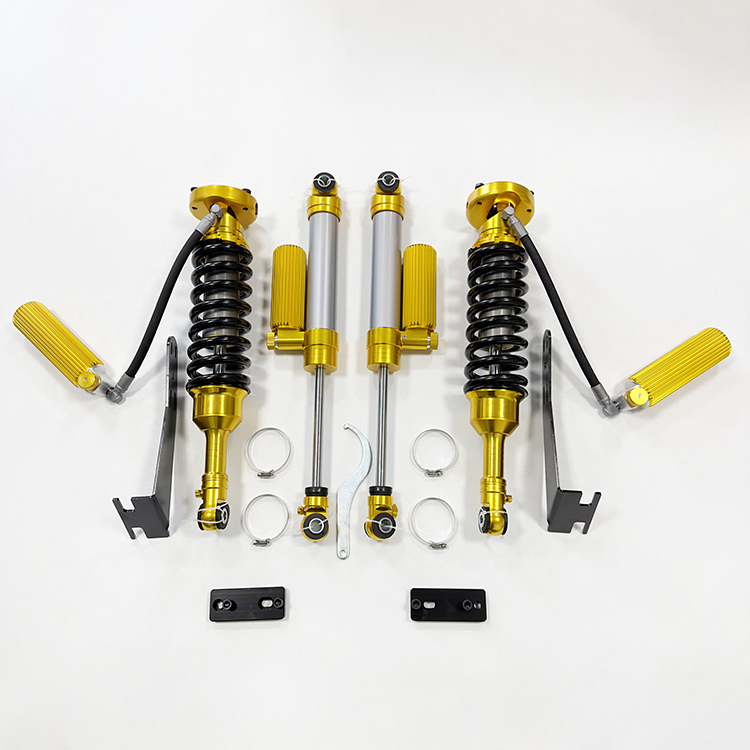
- Remote reservoirs
- High-flow valving
- Premium seals
These features improve responsiveness and durability.
Why HPR Adjustable Shocks Stand Out
HPR Offroad Shocks develops advanced suspension systems featuring:
- Adjustable compression damping
- Adjustable rebound damping
- Remote reservoir technology
- Precision CNC manufacturing
- Vehicle-specific tuning
Our products help drivers adapt their suspension for changing terrain while maintaining excellent comfort and reliability.
Final Thoughts
Adjustable damping transforms a suspension system from a fixed solution into a highly adaptable performance tool.
Understanding compression and rebound tuning allows drivers to optimize ride quality, traction, and vehicle control in virtually any environment.
Explore HPR’s latest adjustable suspension systems today:
https://www.hpr-offroadshocks.com/
Post time: Jul-04-2026