
The Toyota 4Runner has become one of the most popular platforms for off-road enthusiasts, overland travelers and adventure builds.
However, changing tires, springs and ride height can significantly change how the suspension behaves.
Choosing the correct shock absorber is therefore essential.
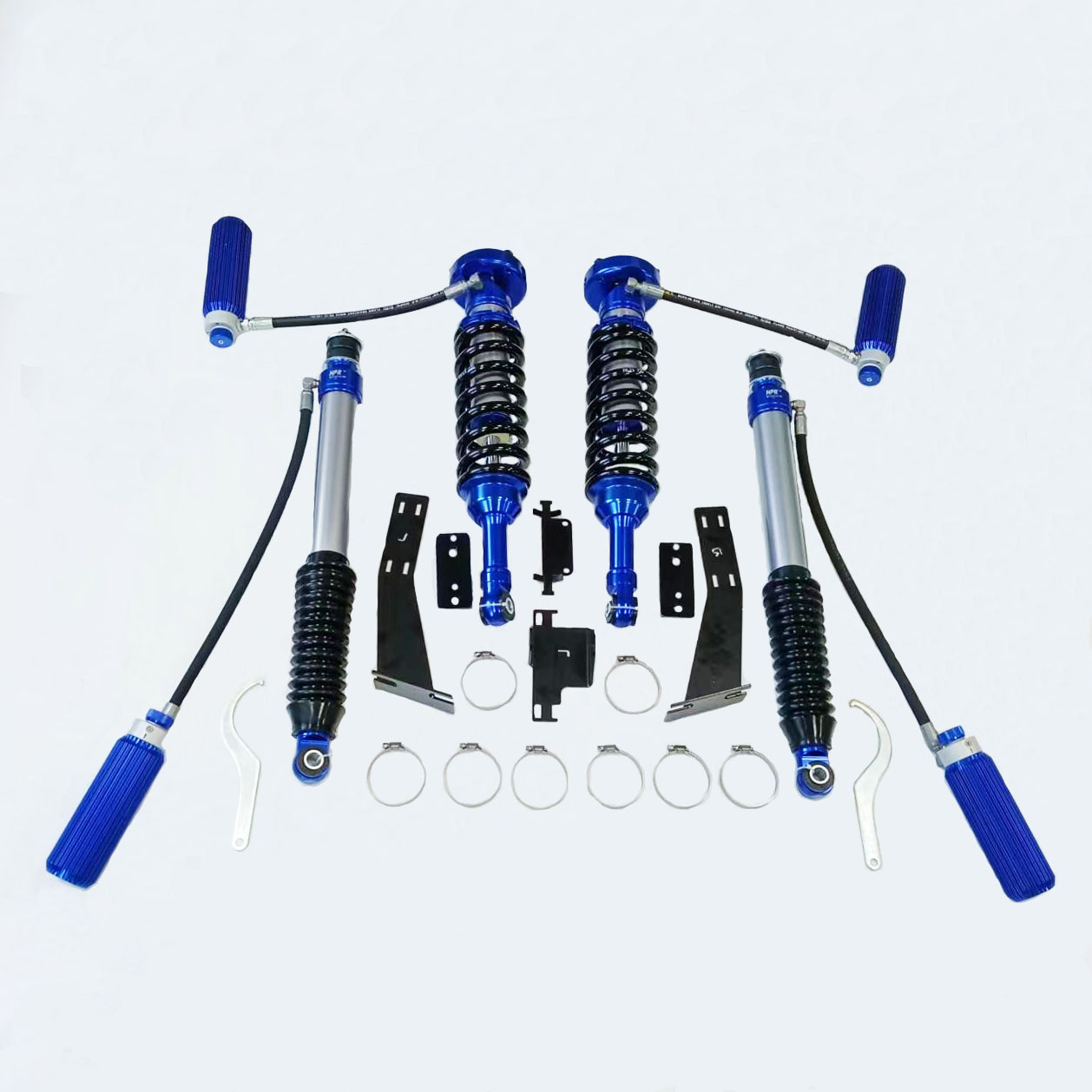
HPR Offroad Shocks offers dedicated 2.0-inch off-road shock applications for Toyota 4Runner models and also provides larger performance shock configurations for demanding off-road builds.
Why Upgrade 4Runner Shocks?
Factory shocks are designed around the original vehicle configuration.
Aftermarket modifications can significantly increase suspension demands.
For example, a 4Runner equipped with:
- Larger tires
- Lift springs
- Steel bumpers
- Winch
- Roof rack
- Roof tent
- Recovery gear
may require different damping characteristics.
HPR 2.0 Shocks for Toyota 4Runner
HPR’s 2.0 off-road shock category lists the Toyota 4Runner 2009+ as an application.
The listed product is designed around a 2.5-inch lift configuration.
This makes it relevant for owners running a lifted 4Runner who want a vehicle-specific performance shock.
Shock Absorber vs Spring
It is important to understand that springs and shocks perform different functions.
The spring primarily supports vehicle weight and determines much of the ride height.
The shock controls suspension movement.
A stronger spring without appropriate damping can result in excessive oscillation.
A high-performance shock with an unsuitable spring may also fail to deliver the desired result.
A properly engineered suspension upgrade therefore considers both components together.
How Does Lift Height Affect Shock Selection?
Lift height affects the operating range of the shock.
A shock designed for a particular lift should have suitable compressed and extended dimensions.
Installing an incorrectly sized shock can potentially cause:
- Reduced suspension travel
- Premature topping out
- Bottoming
- Poor ride quality
- Mechanical interference
Always confirm the exact vehicle and lift configuration before ordering.
When Should You Consider 2.5-Inch Shocks?
A 2.5-inch shock may be more appropriate for a heavily modified 4Runner.
Typical situations include:
- High-speed off-road driving
- Heavy overlanding
- Desert trails
- Frequent long-distance travel
- Increased vehicle weight
- Aggressive suspension cycling
The larger body can provide increased working volume and thermal capacity compared with smaller shock configurations.
4Runner Shock Selection Checklist
Before ordering, check:
Vehicle: Toyota 4Runner
Year: Confirm exact model year
Lift: Confirm actual suspension lift
Weight: Include aftermarket equipment
Tires: Record tire size
Terrain: Highway, trail, desert or rock
Driving style: Recreational or aggressive
Conclusion
A good 4Runner suspension upgrade is not simply about choosing the biggest shock.
The best result comes from matching shock size, valving, lift height and vehicle weight.
HPR offers vehicle-specific off-road shock solutions for Toyota 4Runner and other major 4×4 platforms.
Contact: +86 136 1658 6065
Service Hours: 9:00–23:00 daily
Post time: Oct-08-2026