
Selecting off-road shocks can be confusing because there is no universal shock absorber that works perfectly for every 4×4.
Two vehicles of the same model may require completely different shocks because their suspension lifts, vehicle weights and driving conditions are different.
HPR Offroad Shocks offers multiple shock categories, including 2.0-inch off-road shocks, 2.5-inch mono-tube shocks, double hose remote-reservoir shocks and adjustable high-low-speed shock configurations.
1. Start With Lift Height
Lift height is one of the first things to determine.
A shock must have suitable compressed and extended lengths for the suspension.
Common lift configurations include:
- Stock height
- 1-inch lift
- 2-inch lift
- 2.5-inch lift
- 3-inch lift
- 4-inch lift
HPR’s product range includes numerous applications designed around 2-inch and 2.5-inch lift configurations.
2. Consider Vehicle Weight
Vehicle weight has a major effect on suspension behavior.
A factory SUV may have a relatively standard load.
An overland vehicle may carry hundreds of kilograms of additional equipment.
Always consider the vehicle’s actual operating weight rather than its original factory specification.
3. Consider Driving Terrain
Different terrain creates different suspension demands.
Highway
Highway driving requires stable damping and good ride comfort.
Gravel
Gravel roads require fast suspension response and good rebound control.
Desert
Desert driving can generate substantial heat due to repeated suspension movement.
Rock Crawling
Rock crawling prioritizes articulation and controlled suspension movement.
Overlanding
Overlanding requires a balance between durability, comfort and load control.
4. Choose the Shock Diameter
HPR provides 2.0-inch and 2.5-inch shock configurations.
A 2.0-inch shock may be appropriate for many moderate 4×4 applications.
A 2.5-inch shock can provide greater fluid volume and thermal capacity for more demanding applications.
5. Consider Remote Reservoirs
Remote reservoirs are useful when the shock needs additional working volume or when packaging requires the reservoir to be separated from the main body.
HPR’s Double Hose Offroad Shox range uses remote-reservoir designs with compression and rebound adjustment.
6. Think About Adjustability
Adjustable shocks allow drivers and suspension engineers to change damping characteristics.
This is especially useful for vehicles whose loads change frequently.
A vehicle may have one setup for daily driving and another for long-distance overland travel.
Common Shock Selection Mistakes
Mistake 1: Choosing by vehicle model only
A Land Cruiser with stock suspension and a heavily modified Land Cruiser do not necessarily need the same shock.
Mistake 2: Ignoring vehicle weight
Additional accessories can significantly change suspension requirements.
Mistake 3: Ignoring lift height
Shock length must match suspension travel.
Mistake 4: Choosing the largest shock automatically
Bigger does not always mean better.
The shock must be correctly matched to the vehicle.
Final Checklist
Before buying off-road shocks, know:
Vehicle model:
Vehicle year:
Lift height:
Vehicle weight:
Tire size:
Front suspension:
Rear suspension:
Typical terrain:
Driving style:
Desired adjustment:
With these details, a shock supplier can recommend a more appropriate configuration.
Conclusion
The best off-road shock absorber is the one that matches the vehicle and its real-world use.
HPR’s product range covers multiple shock diameters, configurations and vehicle applications for 4×4, racing and overland builds.
Contact: +86 136 1658 6065
Service Hours: 9:00–23:00 daily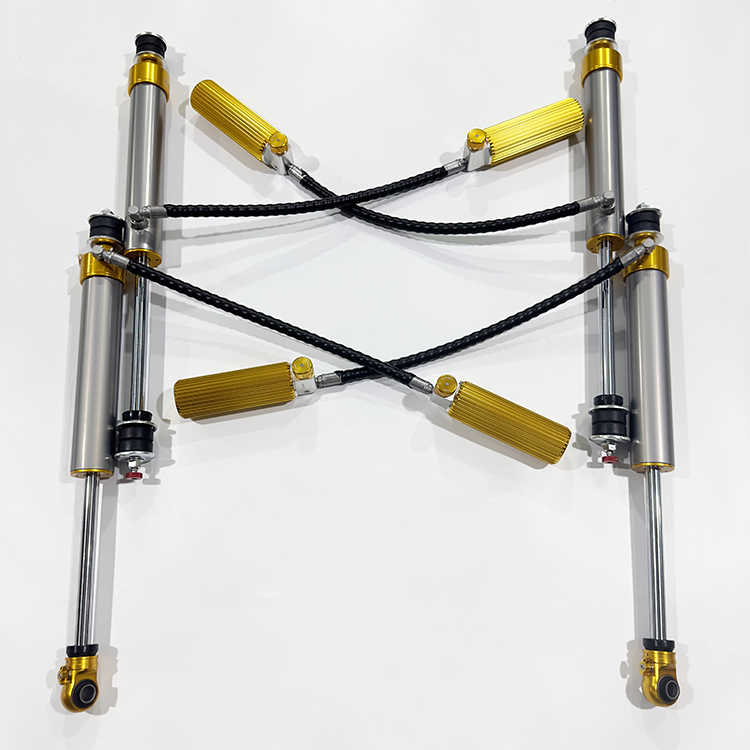
Post time: Oct-10-2026