
A shock absorber may look simple from the outside, but it plays a critical role in vehicle control.
For normal road driving, factory shock absorbers are generally designed to balance comfort, handling and cost.
Off-road vehicles operate under much more demanding conditions.
Repeated impacts, large suspension movements, increased vehicle weight and high temperatures can place significantly greater demands on the damping system.
This is why high-performance off-road shocks are engineered differently.
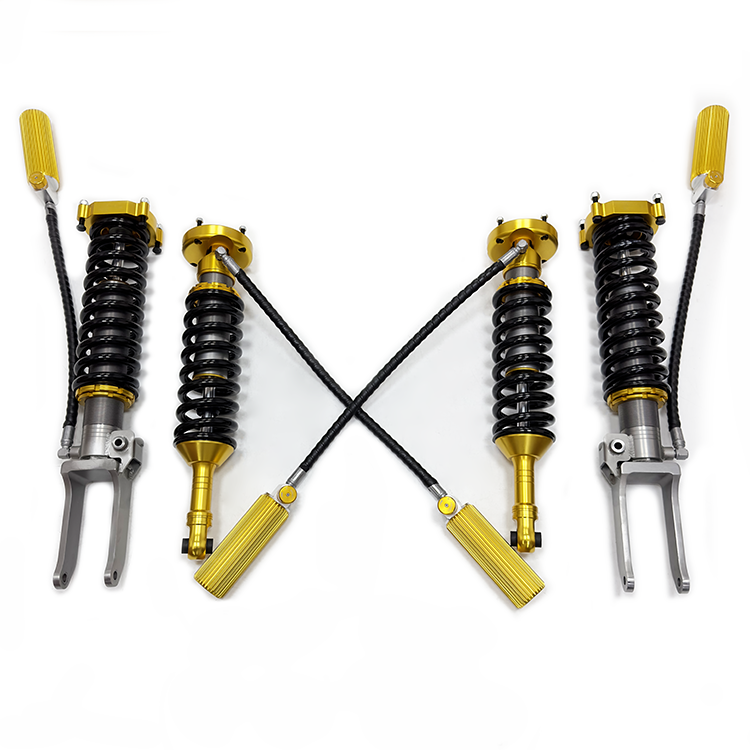
HPR Offroad Shocks offers multiple performance-oriented configurations, including 2.0-inch off-road shocks, 2.5-inch mono-tube shocks, double hose remote-reservoir shocks and adjustable high-low-speed nitrogen shocks.
Standard Shock vs Performance Off-Road Shock
The biggest difference is the intended operating environment.
A standard road shock is generally designed around predictable road surfaces.
A performance off-road shock must manage:
- Large suspension movements
- Repeated impacts
- Higher temperatures
- Greater suspension travel
- Increased vehicle loads
- Variable terrain
- Aggressive driving
Larger Shock Bodies
HPR offers 2.0-inch and 2.5-inch shock configurations for different applications.
A larger shock body can provide greater fluid volume and thermal capacity.
This can be particularly valuable during repeated off-road suspension cycling.
Mono-Tube Technology
Mono-tube shock designs are widely used in performance suspension systems because the design can provide a large working piston and effective heat transfer through the shock body.
For demanding 4×4 applications, this can help deliver consistent damping characteristics.
Remote Reservoir Technology
A remote reservoir adds additional volume outside the main shock body.
HPR’s Double Hose Offroad Shox products use remote reservoirs and are available for many major 4×4 platforms.
This configuration is particularly useful for high-demand applications.
Compression Adjustment
Compression adjustment allows the shock’s compression damping characteristics to be changed.
This can help tune the vehicle for different road and off-road conditions.
For example, a vehicle may require a different setting when it changes from highway driving to rough desert terrain.
Rebound Adjustment
Rebound adjustment controls how quickly the suspension extends after compression.
Correct rebound control helps prevent the vehicle from continuing to bounce after hitting an obstacle.
High-Low-Speed Adjustment
HPR also offers high-low-speed three-way adjustable nitrogen shock configurations.
For example, the Ford F-150 application listed by HPR uses a 2.5-inch shock with three-way adjustment and separate high/low-speed control. The published configuration includes compression and rebound adjustment ranges.
This type of shock is aimed at users who require a high level of suspension tuning.
Why Vehicle-Specific Design Matters
An off-road shock should not be selected based solely on its physical size.
Vehicle-specific design considers:
- Suspension geometry
- Vehicle weight
- Lift height
- Wheel travel
- Mounting configuration
- Spring rate
- Intended terrain
This is why HPR provides dedicated applications for Toyota, Ford, Jeep, Nissan, Mitsubishi, Suzuki, GWM and other 4×4 platforms.
Who Needs High-Performance Off-Road Shocks?
Performance shocks are especially useful for:
- Off-road enthusiasts
- Overland travelers
- Desert drivers
- Racing teams
- Heavy-duty 4×4 owners
- Modified pickup trucks
- Expedition vehicles
- Suspension upgrade specialists
Final Thoughts
A high-performance off-road shock is more than a replacement component.
It is part of the complete suspension system.
Choosing the correct diameter, shock design, adjustment range and vehicle-specific fitment can significantly influence how a 4×4 behaves both on and off the road.
HPR Offroad Shocks provides a broad range of vehicle-specific performance shocks for customers looking for off-road, overland and racing suspension solutions.
Contact: +86 136 1658 6065
Service Hours: 9:00–23:00 daily
Post time: Oct-10-2026