
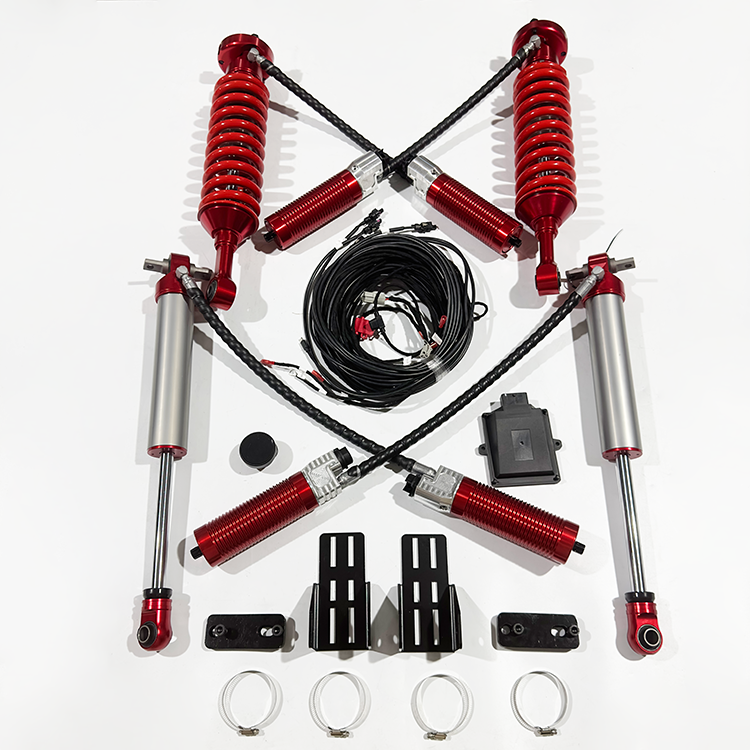
Ever wondered how HPR creates shocks that are specifically designed for the GWM TANK 300? It’s not just about making a “one-size-fits-all” upgrade— it’s a rigorous engineering process that combines off-road expertise, advanced technology, and a deep understanding of the TANK 300’s suspension. Here’s a behind-the-scenes look at how HPR’s CDC Nitrogen shocks are born.
Step 1: Vehicle-Specific Research
First, HPR’s engineers tear down a GWM TANK 300 to study its factory suspension. They measure every dimension (mounting points, shock length, travel), analyze the vehicle’s weight distribution, and test how the factory shocks perform in different conditions. This research ensures the CDC shocks fit perfectly and complement the TANK 300’s unique dynamics.
Step 2: Technology Integration
Next, the team integrates CDC technology with nitrogen charging. They select high-performance sensors that can withstand off-road conditions (dust, moisture, extreme temperatures) and program the control module to work with the TANK 300’s onboard systems. The goal: create a system that’s seamless— the shocks feel like they came from the factory, but with far better performance.
Step 3: Material Selection
HPR doesn’t cut corners on materials. The CDC shocks use:
Seamless steel bodies (internal and external polished for smooth operation)
Japan NOK twin-lip seals (to prevent leaks and ensure durability)
High-strength aluminum alloy components (CNC-machined for precision)
German Continental oil hoses (for maximum pressure resistance)
Every material is chosen for off-road performance— it has to withstand mud, rocks, extreme temperatures, and constant use.
Step 4: Rigorous Testing
Before the shocks hit the market, they undergo months of testing— both in the lab and on the trail. Lab tests simulate 100,000+ miles of driving, including extreme impacts, temperature cycles, and corrosion resistance. Trail tests are done on the same terrain TANK 300 owners love: rocky mountains, muddy trails, and high-speed dirt roads. The team adjusts the damping curves and mode settings based on test results, ensuring the shocks perform perfectly in real-world conditions.
Step 5: Final Optimization
Finally, the shocks are fine-tuned for the GWM TANK 300’s weight and suspension geometry. The four modes (Comfort, Standard, Sport, Professional) are calibrated to match the vehicle’s capabilities, so you get the right balance of comfort and control— no matter how you drive.
The result? A shock that’s not just an upgrade, but a perfect match for the GWM TANK 300. HPR’s CDC Nitrogen shocks are engineered by off-roaders, for off-roaders— and it shows in every detail.
Post time: Jan-14-2026